stardust trash. luminous scintillating muck and dust. we rot in the bushes and are reborn anew. from timeless time we return again.
warning: some content on this site contains flashing visuals that could trigger photosensitive conditions.
1D 2D best-of bonsai cellular-automata corrupted falling-sand fractals has-code interactive-fiction landscape low-poly no-code particles spirograph unknown
newest posts
-

line 2-5
line2-5.zip (74kb) discover the power to grow upwards and then grow in many directions at once. grow a brand new batch of weeds in the dirt. find random crystalline shards.
-

lines
lines.zip (1kb) all 1-D cellular automata. figure out some rules to grow roots. dig deep, burrow and branch.
-

newgrid d
newgrid-d.zip (8kb) 1-D and 2-D cellular automata one at a time? no, both at once. grow vines, twist the grid.
-

newgridz
newgridz-zz.zip (4kb) change the grid update rules to work in a line from top to bottom. prepare to initiate 1-dimensional cellular automata rules.
-

newgrid
newgrid-2-3-4.zip (5kb) take the grid and make it move with arbitrary numbers. color cycling, palette swaps. get comfortable with per-cell operations.
-

biggrid
biggrid-2-3.zip (8kb) begin with a grid. figure out how to do transformations on it with every update step. recreate a familiar effect from an old movie.
-

windy 1-6
generate noise along compound curves across time, to simulate temperature variations over many years.
-

particles 1-3
invent some methods to create, move, and destroy particles. make a roaring bonfire.
featured projects
-
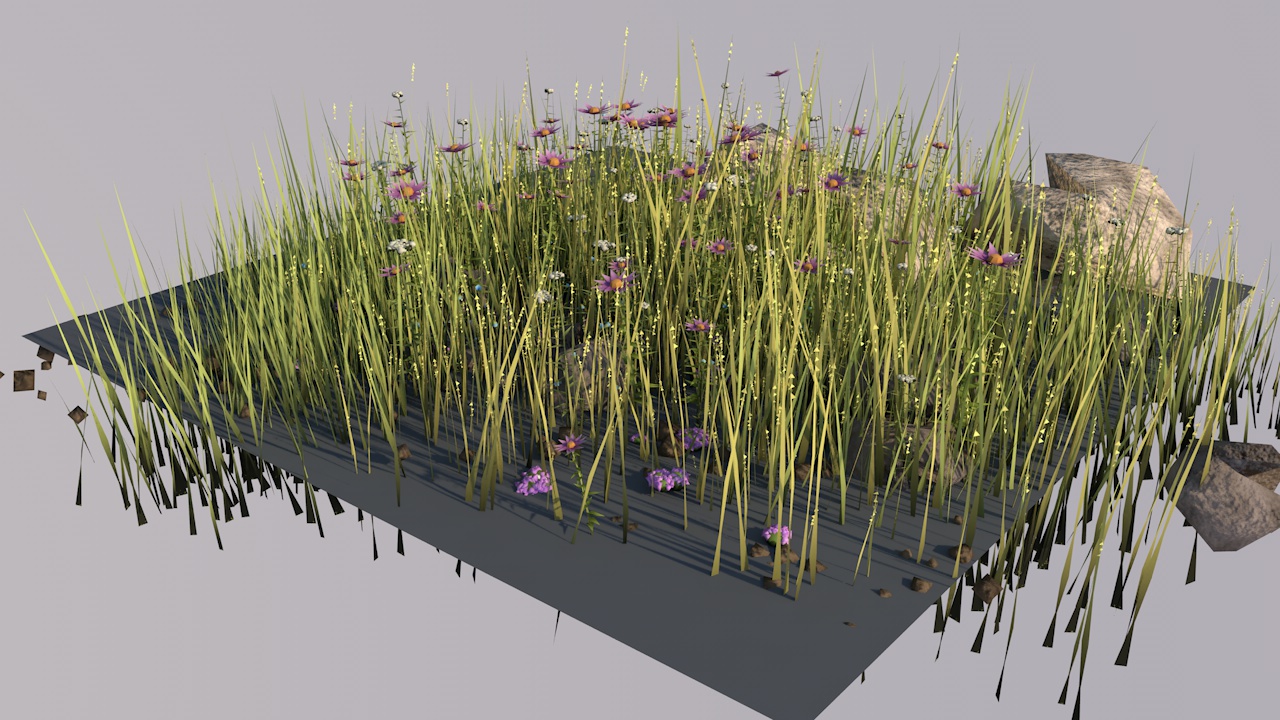
meadow showcase revue
going back to old ideas left on the shelf. the old meadow assets have lain fallow and need porting over into modular format for proper use in scenes. 37 assets in total, half of that is rocks.
depending on who you ask, these bones came into being in 1898, 1979, or 2015. we are not certain if any of those dates are true. they have been known by many names, but you may have known them as @mzxio or @themsbones. they offer this art to you in the spirit of fun and learning together, in the hopes that you will be inspired. we won’t stop you from stealing our art but we hope if you do, perhaps you could let us know what kind of life our art has gone on to have?